
Terminologies
Luxury Vinyl Tiles / Luxury Vinyl Flooring
Luxury Vinyl Tiles are made of synthetic flooring material that mimics the appearance of natural materials such as wood, stone, or carpets. Since the launch of the LVT flooring product, it has been a popular choice of flooring for both residential and commercial renovation due to its durability, ease of maintenance, and almost endless design aesthetic options. Luxury vinyl flooring is engineering structured with several layers, including a base layer core, a design layer, and a protective wear layer on top. The two most common installation methods available are glue-down or click-lock methods, making it flexible for different type of flooring projects and applications. This affordable flooring option is also known for its waterproof performance, which makes it an ideal choice for areas that are prone to moistures, such as kitchens, bathrooms, basement, and others.
LVT / LVP
LVT and LVP stands for Luxury Vinyl Tiles and Luxury Vinyl Planks.
Stone Plastic Composition
Per the name suggested, stone plastic composition is a modified material that uses calcium carbonate and polyvinyl chloride. The combination of these two composition creates a rigid core planks that is both thin and durable as a floor covering product. The rapid market grown in stone plastic composition flooring has made a distinctive reputation on this type of flooring.
SPC
SPC stands for Stone Plastic Composition. Known as the SPC flooring. Similar to LVT flooring, SPC flooring also falls within the resilient flooring category. However, SPC is engineering formulated to deliver a more robust and rigid core that made it more durable from dimensional stability and indentures.
L-SPC
The L- refers to “light” as in having smaller and lighter density in the SPC core. The innovation for light SPC core was to reduce the density weight of SPC floorings. With reduced weights, flooring importers are able to ship more quantities (in square meter or square feet) under the same product specifications. It is an effective cost reduction product strategy especially when shipping rates are fluctuated too high.
WPC
The original WPC refers to the Wood Polymer Core which was largely used on outdoor decking. However, when it comes to resilient floorings, the WPC has an entirely different composition. WPC as a vinyl product was originally introduced in 2012. The innovation for hollow and foaming core provide a superior acoustic performance that effectively simulate wood echos when walking on. Naturally brands starts to refer it was the WPC core, however it does not have any natural wood composition. The marketers of the major brands later defined it was the Waterproof Polymer Core for their WPC resilient floorings.
Rigid Core Click-Lock Installation
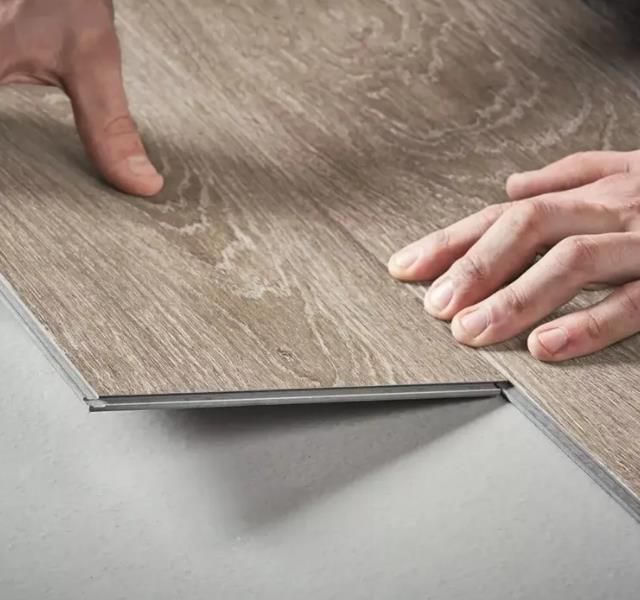
Rigid core flooring, also known as SPC flooring, features a click-lock installation system that can be applied to various subfloor types including wood, non-cushioned vinyl or linoleum, concrete, ceramic, and porcelain tiles if the existing flooring is intact and properly secured to the subfloor. This rigid core SPC is a type of floating floor that works as an excellent alternative to laminate and hardwood flooring. It offers the same benefits of realistic wood or stone appearance design with additional features for waterproof and easy to maintain benefits. When installing rigid core SPC flooring the subfloor must be flat, dry, and clean.
Glue Down Installation
Glue down vinyl flooring attaches to the subfloor through the application of one of two adhesive methods: hard-set or pressure-sensitive. The hard-set adhesive is evenly spread onto the subfloor, then the vinyl tiles are positioned and paved on top. Subfloors can consist of concrete or wood. It is important to ensure that all subfloor surfaces are flat, clean, dry, smooth, and devoid of any movement.
Waterproof Quality
Waterproof means that surface water will not damage the luxury vinyl flooring in any way. This characteristic makes it an ideal choice for residential and commercial spaces that may encounter spills and pet mishaps. It is also an excellent solution for areas that are prone to water exposure, such as kitchens, bathrooms, and basements. Even though luxury vinyl flooring are made of waterproof compositions, any spoiled water should still be cleaned up within 15 minutes as it can still leak into the subfloor especially for dry back LVT.
Wear Layer
Wear layers are typically measured in MIL, which is equivalent to one-thousandth of an inch, not to be confused with millimeters (mm). The thickness of wear layers can range from 4 MIL to 30 MIL. The ideal thickness is typically determined by the level of foot traffic, from household residents and guests to pets. In areas with less frequent use, a thinner wear layer may suffice. For residential flooring that experience high foot traffic, such as entryways or homes with pets, it’s advisable to opt for a wear layer within the 12 MIL to 20 MIL range. In commercial use flooring, it’s recommended to select a wear layer ranging from 20 MIL to 30 MIL for optimal protection and durability.
Pre-Attached Underlayment
Pre-attached underlayment in luxury vinyl flooring is a cushioning material affixed directly to the underside of the flooring plank or tile. There are wide range of materials to be selected from as underlayment. From the more premium materials such as cork underlayment, to the more affordable materials such as foam EVA underlayment, foam IXPE underlayment. Depending on the quality and performance of the material, underlayment can improve sound insulation and comforts on foot when walked on.
Vinyl Flooring Plank Thickness
The thickness of luxury vinyl flooring plank is measured in millimeters, pertains to the vinyl core itself. The overall thickness of different type of vinyl flooring plank can varies with ranging from as thin as 2mm up to 8mm and above for higher premium positioned vinyl flooring products. The choice between
thicker and thinner vinyl flooring necessitates with specific subfloor requirements and entails distinct installation preferences.
Acclimation Requirement
Acclimation refers to the time it is needed for the vinyl flooring to settle and adjusted to the surrounding environment of the intend installation areas. Brands generally requires their LVT and SPC flooring to have at least 48 hours of acclimation time in prior to installation. Failure to give sufficient acclimation time can cause invalidity for product warranty.
Some higher quality LVT and SPC flooring also offer acclimation free requirement. With improved dimensional stability and zero curling performance, acclimation free flooring can save time and money during installation.
Greenguard Certification
The Greenguard Certification standard encompasses health related guidelines for added chemicals and mandates reduced overall VOC emission levels, ensuring that luxury vinyl flooring products are suitable for both residential and public areas such as educational institutions, healthcare facilities, and other public environments.