
The popularity of Luxury Vinyl Tile LVT flooring has surged in both residential and commercial interior designs. This is largely due to its affordability, durability, and authentic grain designs. This article explores LVT flooring in detail, covering its characteristics, variations, advantages, and installation techniques to illustrate why it’s a top flooring choice today. Thanks to quick installation innovation developments, the LVT market has further expanded significantly, providing buyers with numerous styles, textures, colors as well as functionalities. With such a wide array of choices, selecting the appropriate manufacturer can be difficult. The following is a detailed guide to the top 10 LVT flooring manufacturers to consider in 2026.
What is LVT Flooring?
Often abbreviated as LVT, Luxury Vinyl Tile is a type of vinyl flooring designed to simulate natural materials such as hardwood, stone, or ceramic tile. In contrast to conventional homogeneous vinyl flooring, which typically comes in large rolls, LVT are built in the form of planks or tiles. This product structure, in combination with cutting-edge printing and embossing techniques, provides LVT with a very realistic appearance.
Key Components of LVT Flooring
A typical LVT flooring consists of multiple layers, each layer will fulfill a part of functions that delivers a long lasting functional and durable floor covering:
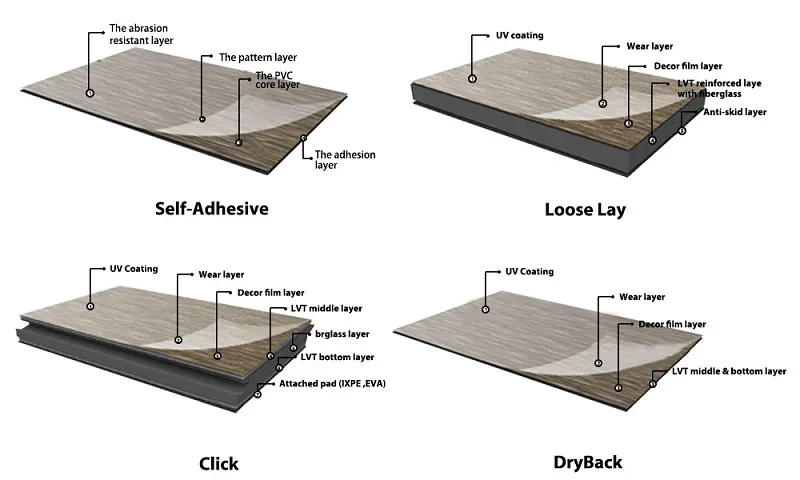
1. Wear Layer:
- A transparent protective top layer guards against scuffs, stains, and wear. The product life time in LVT are mostly determined by the wear layer’s thickness.
- The wear layers can range from 6mil / 0.15mm (suitable for light residential use) up to 20 mil / 0.5mm (ideal for heavy commercial applications).
2. Printed Graphic Deco Layer:
- This deco layer give the LVT its realistic aesthetic by laminating the high-definition graphic images of natural materials. Detailed features such as wood grain or stone are made available with this printed graphic deco layer.
3. Base Layer / Core Layer:
- The core layer offers the LVT plank with its durability when it comes to structurer and load bearing. This layer offers the flooring’s structural strength and stability. There are various core types, for LVT its referred as the base layer, for SPC it is referred as the core layer.
4. Underlayer:
- Serving as the bottom layer, it enhances stability and occasionally includes an integrated underlayment for better comfort and sound dampening. Different type of underlayer can bring different functions and performance, such as for grip and anti-slip or acoustic performances. Some of the most common underlayer are EVA foam, IXPE foam, and cork.
Core Benefits of LVT Flooring
1. Realistic Appearance
One of LVT’s main advantages is its capacity to mimic natural materials like wood and stone. Thanks to developments in high defination printing and embossing techniques, LVT provides remarkably realistic visuals that can even fool keen observers. This made LVT highly attractive at only a fraction of real hardwood floorings.
2. Durability and Longevity
LVT flooring is renowned for its robustness. With a durable protective wear layer that can resists scratches, dents, and stains. It’s appropriate for both residential and commercial settings, with an anticipated longevity of 15-25 years, contingent on quality and extend product life time.
3. Waterproof Quality
LVT is waterproof, unlike hardwood or laminate flooring. This makes it a fantastic option for spaces that are prone to moisture, like kitchens, baths, laundry rooms, and even basements.
4. Easy Maintenance
Cleaning and maintaining LVT is straightforward. Frequent vacuuming or sweeping, in conjunction with the occasional damp mopping, is all it takes to keep it maintained. The wear layer provides an additional barrier against spills and stains, rendering it a low-maintenance flooring choice for residentials.
5. Comfort and Acoustic Properties
LVT plank with acoustic underlayer offers a more cushioned underfoot compared to ceramic tile or hardwood, which makes it more comfortable to stand on for extended long period of time. This integrated underlayment is a common design in many LVT flooring products, enhancing sound absorption and minimizing noise transfer in multistory structures.
6. Easy Installation Options
LVT can be installed by professionals or do-it-yourselfers since it comes in a variety of installation techniques. Both the click-lock system or loose lay style offers super easy installation method that save on time and labour costs.
Maintenance Tips for LVT Flooring
To maintain the appearance and extend the product life of your luxury vinyl tile (LVT) flooring, it’s important to take maintenance of it. While LVT is valued for its durability, implementing these easy maintenance practices can help you get the most out of your LVT floorings.
1. Regular Cleaning Routine
The most straightforward method to keep your LVT flooring looking and performing well is to keep it tidy. Here’s your to-do list:
- Sweep or Vacuum Daily: Over time, dust and debris can function as sandpaper, scratching the surface. To get rid of particles, use a soft-bristle broom or a vacuum cleaner made for hard floors.
- Damp Mop Weekly: Keep the flooring’s shine by using a damp mop and a gentle, pH-neutral cleanser. Steer clear of harsh chemicals because they could harm the wear layer.
- Spot Clean Spills Immediately: Even though LVT is water-resistant, it’s better to clean up spills right away to avoid any potential stains or damage.
2. Protect High-Traffic Areas
Areas with high pedestrian activity, such as hallways, kitchens, and entrances, are more likely to show wear and tear. Think about using rugs or floor mats in these places to lessen the impact of regular foot traffic. To safeguard the floor’s surface and avoid slipping, make sure the mats have a non-slip backing and are non-staining.
- Furniture Pads: To prevent scratches while you’re moving furniture, place felt pads beneath furniture legs.
- Use Protective Mats: To prevent potential damage from wheels, place mats beneath rolling office chairs.
3. Avoid Excessive Moisture
Excess moisture should be avoided, even though most LVT flooring is water-resistant, as it can get into the joints and cause damage over time.
- Wipe Up Standing Water: To stop moisture from seeping into the subfloor, thoroughly dry any standing water.
- Limit Steam Cleaning: The high heat and moisture from steam mops can harm the wear layer and the adhesive, so avoid using them.
4. Minimise Sun Exposure
LVT flooring can fade and lose color over time when exposed to direct sunlight. To safeguard your floors, think about the following advice:
- Use Curtains or Blinds: To reduce exposure, draw the curtains or blinds during the hours of peak sunlight.
- Apply Window Film: The intensity of sunlight can be lessened with UV-blocking window films, which will shield the floor from fading.
5. Periodic Deep Cleaning
Use a specialized LVT floor cleaner for a more thorough cleaning. To prevent harming the surface, make sure it works with the specific brand and kind of LVT flooring you have.
- Avoid Wax and Polish: LVT doesn’t need to be waxed or polished, unlike hardwood floors. Applying these products can make the floor slick and impair its look.
You can maintain your LVT flooring appearing brand-new for many years and optimize your purchase by following these maintenance tips.
Why LVT Flooring is a Smart Choice
1. Superior affordability
Due to its low cost and long lifespan, luxury vinyl tile flooring is a great investment. LVT provides comparable aesthetics to natural wood or stone at a lower cost. Its durability guarantees that the flooring will stay in good shape for many years.
2. Low Maintenance Requirements
Its minimal maintenance is one of LVT flooring’s greatest benefits. It only needs little upkeep—regular sweeping and the occasional damp mopping will keep it looking immaculate. The protective wear layer also reduces the need for routine repairs or refinishing, which saves you time and money over time.
3. Versatility in Design
Homeowners and businesses can select flooring that ideally matches their interior design thanks to LVT’s wide selection of styles, patterns, and colors, which can mimic the appearance of wood, stone, ceramic, and even metal. LVT has you covered whether you want a sleek, contemporary style or a rustic, traditional one.
4. Durability and Performance
LVT’s remarkable durability is a result of its multi-layer construction. Usually, it has a printed design layer, a waterproof core, a backing layer, and a wear layer. Because of this structure, it is resistant to scratches, dents, and water damage, making it ideal for high-traffic areas and even wet environments like kitchens and bathrooms.
5. Eco-Friendly Options
As environmental concerns rise, a large number of LVT producers have increased their sustainability initiatives. Eco-friendly products made with recycled materials and produced using methods that cut carbon emissions are available from manufacturers like Tarkett, Forbo, and Mohawk. This makes LVT flooring a desirable option for environmentally concerned customers who want to lessen their impact on the environment.
As a flooring business, how to choose a right LVT flooring suppliers
When choosing an LVT flooring manufacturer, there are several factors you should take into account to ensure you make the best choice for your area:
1. Specifications and Durability
The wear layer’s thickness is a crucial factor in determining the durability of LVT flooring. Scratches, scuffs, and general wear and tear are better protected by a thicker wear layer. Think about buying products with a wear layer thickness of at least 20 mils for locations with high foot traffic, such as hallways and living rooms.
2. Design and Aesthetics
One of its strongest selling points is the visual attractiveness of LVT. It is crucial to choose a brand that provides a broad range of designs and colors, whether you prefer a traditional look or a contemporary style. Major brands such as Shaw Industries and Mohawk Industries stand out in the industry for providing a wide range of design collections that appeal to a broad spectrum of tastes, from traditional to modern.
3. Installation Method
The installation technique is yet another crucial factor. Click-lock system from flooring technology companies such as Unilin, Valinge, and i4F offers various of options that support DIY users because they are easy to install without the need for expert assistance.
4. Warranty and Customer Support
Reputable flooring brands and manufacturers provide extensive warranties over their vinyl flooring products. Selecting a brand manufacturer with a solid warranty and responsive customer service can be crucial for flooring retailers. Brands like Karndean and Mannington Mills are well-known for their superior customer service and long-term warranties.
Top 10 LVT Flooring Manufacturers in Flooring Business
1. Shaw Floors
Overview of Shaw Floors
A significant player in the flooring sector, Shaw Floors has developed a reputation for producing high-quality, resilient, and fashionable flooring solutions over its more than 50 years in business. Their LVT products are well-regarded for their outstanding performance and cutting-edge designs. By revenue size, Shaw industries is one of the biggest LVT flooring manufacturers in the world.
Key Features
- Wide Range of Styles: Shaw Floors provides a wide selection of LVT designs, ranging from stone and wood finishes to modern abstract styles.
- Durability: Shaw LVT is perfect for both residential and commercial settings because it is well known for its resistance to dents, moisture, and scratches.
- Sustainability: Shaw is a sustainable option for environmentally conscious consumers because of its emphasis on environmentally friendly manufacturing techniques and recyclable products.
2. Mohawk Industries
Overview of Mohawk Industries
Mohawk Industries is among one of the biggest flooring producer worldwide, providing a broad array of flooring options, including carpets, laminate flooring, resilient flooring (LVT/SPC/WPC), and more. They are well-known for their dedication to sustainability and cutting-edge technologies. By annual revenue, Mohawk industries is considered one of the top 3 LVT flooring manufacturers globally.
Key Features
- Wide Selection: Mohawk offers an extensive LVT & SPC product portfolio, ranging from contemporary stone textures to traditional wood looks.
- Scratch and Stain Resistance: Mohawk’s vinyl flooring products are designed to withstand significant wear and tear by utilizing their exclusive technology.
- Sustainable Practices: Mohawk has put in place a number of environmentally beneficial programs, including low-emission manufacturing and recycling programs.
3. Armstrong Flooring
Overview of Armstrong Flooring
For more than 150 years, Armstrong Flooring has been a reliable name in the flooring business. Their vinyl flooring products offer outstanding comfort, design, and performance.
Key Features
- Advanced Technology: Armstrong applies a Diamond 10 Technology, which provided superior scratch resistance performance over their resilient vinyl flooring collections.
- Design Versatility: Provides a broad array of designs appropriate for diverse uses, from residential to commercial environments.
- Easy Installation: Armstrong’s LVT/SPC has simple installation choices, including glue-down and click-lock types.
4. Hengdi Flooring
Overview of Hengdi Group
Founded in 2020, Hengdi flooring has distinguished itself by rapid developments and innovations in resilient flooring products. Dedicated in bettering environmental sustainability, Hengdi New Material Group has developed its own composition formula for polypropylene based resilient flooring manufacturing, a PVC free flooring that effectively phase out Polyvinyl Chlorides.
Key Features
- PVC Free Vinyl Flooring: Investing in the development of PVC alternative compositions, Hengdi has developed a high fire retardant formula for polypropylene resilient flooring.
- Scratch Resistance: Working with leading coating technology company, our launch for 38N scratch resistance performance on LVT / SPC planks.
- Rapid Manufacturing Service: Hengdi floor provide rapid manufacturing service. With in-warehouse inventory films, the production lead-time for LVT and SPC can be as short as 10 days.
5. Tarkett
Overview of Tarkett
Tarkett is a global frontrunner in PVC free flooring solutions. With a heritage extending beyond 140 years, Tarkett’s LVT offerings garner prominence for their robustness, aesthetic appeal, and eco-consciousness.
Key Features
- Innovative Technology: Tarkett integrates advanced surface treatments that refine the robustness and visual allure of their LVT flooring.
- Sustainability: The enterprise champions environmentally sound methodologies, proffering merchandise that are entirely amenable to recycling.
- Customizable Designs: Tarkett’s LVT arises in an assortment of aesthetics, ranging from faithful wood and pebble simulations to daring, contemporary motifs.
6. Karndean Designflooring
Overview of Karndean Designflooring
Karndean is esteemed for its premium LVT collections, presenting plausible and chic designs. They are niche players in the LVT sector, zeroing in solely on delivering superior vinyl flooring alternatives.
Key Features
- Authentic Designs: Karndean’s LVT stands out for its lifelike wood and pebble visages, encapsulating the essence of nature’s materials.
- Durable Wear Layer: The marque boasts a resilient wear stratum, guaranteeing enduring performance.
- Ease of Maintenance: Karndean’s commodities are effortless to cleanse and uphold, rendering them impeccable for bustling households.
7. Forbo Flooring Systems
Overview of Forbo Flooring Systems
Forbo, an international manufacturer, is synonymous with its high-caliber vinyl flooring commodities. They specialize in the manufacture of LVT that is not only robust and stylish but also eco-conscious.
Key Features
- Wide Variety of Styles: Forbo presents a noteworthy spectrum of designs, catering to tastes both time-honored and avant-garde.
- Green Commitment: Forbo accentuates sustainability, employing eco-friendly materials and manufacturing methodologies.
- Ease of Installation: The LVT commodities showcase user-friendly installation facets, encompassing both click and adhesive systems.
8. Amtico
Overview of Amtico
Amtico, a distinguished LVT manufacturer, is famed for its avant-garde designs and superior quality. They extend a sweeping assortment of fashionable options tailored for both residential and commercial sectors.
Key Features
- Durable Construction: Amtico’s LVT is engineered to endure substantial footfall, rendering it apt for both domestic and commercial premises.
- Custom Design Services: Facilitates bespoke design utilities, empowering patrons to fashion distinctive flooring configurations.
- Waterproof and Scratch Resistant: Excels in performance within locales susceptible to moisture, like kitchens and ablution facilities.
9.Gerflor
Overview of Gerflor
Gerflor, a preeminent global manufacturer, is at the forefront of vinyl flooring solutions. Their forte lies in the provision of high-end LVT offerings, fitting both residential and commercial ven
Key Features
- Innovative Design: Embodies distinct textures and patterns reminiscent of natural constituents such as wood and stone.
- Durability: Celebrated for its robust build, Gerflor LVT epitomizes longevity in high-traffic zones.
- Eco-Friendly: Undertakes environmentally conscious tactics, providing constituents that are entirely conducive to recycling.
10.Mannington Mills
Overview of Mannington Mills
Inaugurated in 1915, Mannington Mills is renowned for its steadfast pledge to unparalleled quality and continuous advancements, presenting a spectrum of stylish yet dependable flooring constituents.
Key Features
- Affordable Quality: Stands distinguished for delivering premium LVT commodities at fiercely contestable price brackets, positioning it as an unrivaled contender for budget-conscious patrons.
- Innovative Technology: Imbues exclusive innovations purposed for augment wear resistance and overall durability.
- Versatile Styles: Presents an impressive assortment of patterns spanning quintessential woody appearances to avant-garde stone-esque aesthetics.
Conclusion
The market for Luxury Vinyl Tile (LVT) flooring continues its rapid expansion, propelled by manufacturers constantly enhancing offerings to accommodate evolving consumer requisites. Each of the top 10 highlighted constituents avails a distinctive fusion of unparalleled quality, pioneering design aesthetics, and groundbreaking innovation. Whether the priority spheres around rugged durability, stylistic sophistication, or conscientious eco-friendliness, a tailored LVT flooring variant can adeptly resolve diverse preferences.
Opting for these esteemed manufacturers like Darekaou guarantees acquiring constituents that not only refine intrinsic aesthetic appeal but also withstand endurance requisites for protracted durations. Ascertain comprehensive cognizance surrounding specialized exigencies such as pedestrian transit intensity, humidity thresholds, and individual compositional preferences when selecting premier LVT constituents aligned for home or business implementations.
FAQs about LVT Flooring
1. What is LVT Flooring?
The acronym LVT is Luxury Vinyl Tile. It is a category of resilient flooring that is manufactured with PVC polymers. Under the resilient flooring category, there are also homogeneous flooring and heterogeneous flooring that are also referred as vinyl flooring rolls. LVT flooring is cut into tile or plank shapes and offers a more dynamic patterns as well as textures. This unique feature made it a more luxurious vinyl flooring compare to homogeneous and heterogeneous vinyl flooring rolls.
2. Is LVT Flooring Durable?
LVT tiles are designed to be robust. With its protective wear layer, LVT is highly durable against wear, tear, scratch, and even most chemicals. This made it superior in terms of functionality and suitable for wide range of flooring conditions.
3. Is LVT Flooring Waterproof?
As a polymer based material, LVT flooring are waterproof itself. The plank will not be damaged or change from moisture and water. However, it does not necessary mean that the substrate or subfloor are protected from moistures. LVT with click system will provide a more protective feature as the locking leaves no room between tiles. Water will have less likely chance to penetrate the joints with Click LVT and click SPC floorings.
4. How Does LVT Compare to Hardwood Flooring?
Hardwood still has a touch of luxurious as it offers the true natural woods and each hardwood plank are truely unique and almost irreplaceable. However, with latest printing technology and embossing techniques, LVT can look as real as hardwoods, but at only a fraction of the price. This is the core reason why in modern interior design, LVT are extreme popular as it offers both cost benefits and functionalities that hardwood does not provide.
- Cost: Affordability considerations routinely tilt beneficially toward LVT constituents.
- Maintenance: Sustenance directives markedly diminish when embracing LVT vis-à-vis routine refinishing associated directly with timber analogs.
- Durability: Enhanced barricades stand resolute defending against imbibing fluid intrusions alongside thwarting superficial striations, or pronounced concussions.
5. Can LVT Flooring be Installed Over Existing Floors?
Yes, it is able to be installed over existing floors. You can easily place LVT flooring over existing floors as long as it is level and with clean flat surface. You also have to consider the floor height to existing doors, frames, and cabinets. As long as there is no issue in these, LVT can be installed according to desire.
Common pre-existing substrates such as concrete, linoleum flooring, and stone marbles are all suitable substrates for installing LVT.
6. How do you clean LVT flooring surface?
Just a regular mop with water will be sufficient most of the time. Vinyl tiles are not very chemical reactive, so it has high stain resistance features.
7. Is LVT Flooring Comfortable to Walk On?
This is a hard question as this is very opinionated based on preferences. In particularly, the market is often confused with LVT and SPC, as SPC is considered a sub-category of LVT. So ti answer this question, we need to seperate flexible LVT with rigid core SPC products.
Flexible LVT is definitely a more comfortable flooring compare to SPC planks. It provide a semi-rigid surface that absorb more impacts when walking on. The semi-rigid surface also means it has less sound reflection and is has better acoustic performance.
Rigid core SPC flooring on the other side, does have some disadvantages over comfort and sounds. However, with more rigid surface, it has better indenture performance as well as load bearing. The stone like feel to SPC is also another downside when comparing to LVT, hardwoods, and carpets.
8. What’s the Difference Between LVT and LVP flooring?
LVT (luxury vinyl tile) and LVP (luxury vinyl plank) are essentially the same product just that different geographical market use a different terminology.
9. Is LVT flooring good for homes with pets?
It is positive. In fact, you might find that LVT flooring is also more environmental healthy for your pets too. Floorings such as engineering hardwoods and laminate flooring use lots of glue in making the planks. These glue has a risk of VoC which can impact your pets. Even in low dose of concentration in VoC can potentially harm your pets’ health.
10. Is LVT Flooring Eco-Friendly?
Arguably no, LVT flooring is not entirely eco-friendly. While major brands claim that their PVC based LVT can be 100% recycled, in practice this is been a major issue as effectively PVC recycling requires more chemical treatments. This not only reduce the recyclability of PVC but also increase carbon foot print as well as toxic fumes in the recycling facility. Due to this problem, non-PVC alternative materials are being develop. Pioneer brands such as Classen’s ceramin SPC and Tarkett’s non-PVC LVT are made from polypropylene. Polypropylene resilient flooring are more eco-friendly in terms of recyclability, toxicity, and carbon foot prints.
11. Is LVT Flooring Safe for Children and Pets?
Totally, LVT flooring is a very safe building material for residentials. The PVC composition is a very stable material, and with trackable source of raw materials, following the industry standards, the LVT flooring are considered safe for children and pets. Note that if a manufacturer use recycled compositions, there is a risk for heavy metals and other source of toxic substances. Reputable brands will outline where their recycled PVC came from with relevant EPD and testing reports.
12. What is the next generation LVT floorings?
The next generation LVT floorings are PVC free resilient flooring that completely phase out the use of Polyvinyl Chloride polymers. Currently, different LVT flooring manufacturers hase set different product innovation roadmaps, some towards polypropylene based LVT, some towards PET based LVT, and some towards natural materials. Tarkett for example, has already launched its polypropylene LVT collections. Shaw for example, has signed partnership deals with classen for its polypropylene SPC collections. Mohawk, with its subordinary brand Unilin, has a technology roadmap for PET floorings and rPET floorings.