
This article summarised the bullet points from Floor Covering Weekly’s annual report on Flooring Industry Market Intelligence, Business Insights & Product Innovation articles. A range of topics are being covered, from flooring retail sector, featuring market research data, business strategies, product innovations, and executive insights from leading flooring brands. The content spans retail success stories, showroom design best practices, market surveys, emerging flooring trends for 2017, and innovative waterproof flooring solutions.
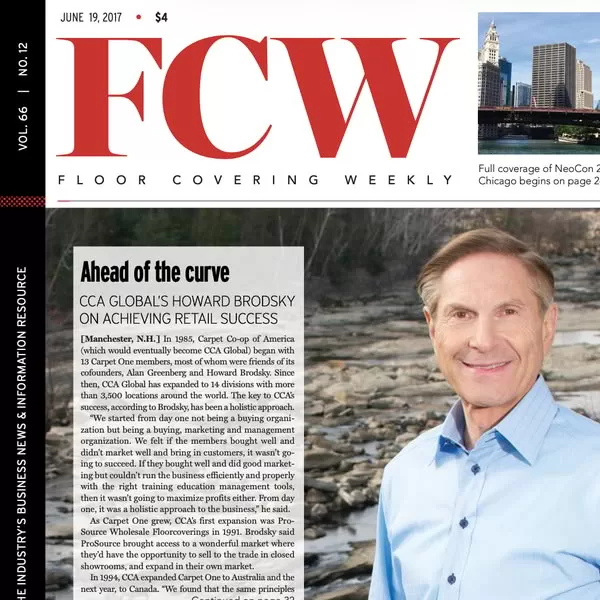
- Understanding the Flooring Retail Landscape
- Building a Holistic Retail Strategy
- Showroom Design: Five Steps to Inspire and Sell
- Succession Planning for Independent Retailers
- Market Intelligence – Product Category Performance
- Top Brand Rankings by Product Category
- Salesperson Influence on Purchase Decisions
- Design Trends 2017 – Flooring Industry Insights
- Waterproof Flooring Solutions: COREtec® Innovation
- Sustainability in Flooring
- Online Reviews and Reputation Management
- Preparation Ensures Business Exit Value
- Key Takeaways for Flooring Retail Success
Understanding the Flooring Retail Landscape
The ReCo Market Intelligence Report surveyed 1,282 flooring retailers nationwide (February–March 2017) with a margin of error of ±2.7 percent, providing a robust snapshot of retail operations. Key findings reveal that 88.5% of respondents are floor covering retailers, with 30% earning up to $1 million annually** and a mean annual flooring sales of **$2,844,436. The average store serves approximately 11–20 customers per week, with residential replacement accounting for 53.1% of sales, followed by builder/new construction at 22.6%.
Data collected by The Wayman Group, an independent marketing research firm with 38 years of industry experience.
Building a Holistic Retail Strategy
CCA Global’s success model demonstrates that competitive advantage requires integration across three core functions: buying, marketing, and management. According to Howard Brodsky, co-founder of CCA Global (formerly Carpet Co-op of America), retailers cannot succeed by optimizing only one dimension. Members who source quality products but fail to market effectively or run operations efficiently will not maximize profits. This holistic philosophy has enabled CCA to maintain a member failure rate below 1% annually—significantly better than the industry standard of 1–6%.
Key Business Principles for Independent Retailers
- Scale through cooperation: CCA’s 14 divisions with 3,500+ locations worldwide leverage collective purchasing power while maintaining local independence
- Diversification across categories: Hard surfaces, soft surfaces, kitchen & bath, and related products enable retailers to capture a larger share of consumer spending
- Technology adoption: Digital marketing, mobile platforms, and customer relationship management systems level the playing field against big-box retailers
- Education and training: Continuous member development ensures sales teams can compete effectively on value, not just price
Showroom Design: Five Steps to Inspire and Sell
Emily Holle, director of trend and design at MS International, outlines a five-step framework for creating high-performing showrooms that balance aesthetic appeal with commercial functionality.
Step 1: Know Who You Are
Define your brand identity and market position clearly. Customers expect consistency between your showroom environment and your brand promise. Before redesigning, clarify: What are your core strengths? What do customers expect from you? What makes your business unique? This strategic clarity ensures your showroom design reinforces—rather than contradicts—your business positioning.
Step 2: Assess the Layout
Spatial organization directly impacts sales performance. Start by identifying your customer’s entry point and what they encounter first. Organize products into intuitive shopping zones grouped by category (hard surface vs. soft surface, or by product type: wall tiles, mosaic, floor tiles). Holle emphasizes that every square foot must justify its value: track sales by fixture and location, then eliminate underperforming displays. High-performing retailers can quantify the revenue contribution of each square foot.
Step 3: Hit the Lights
Lighting is often overlooked despite its profound impact on sales. Two categories serve distinct functions:
| Lighting Type | Function | Examples |
|---|---|---|
| Functional | Essential visibility and task lighting; “workhorse” of the showroom | Track lighting, spotlights, task lighting |
| Decorative | Creates ambiance and brand personality | Pendant lights, colored fixtures, ambient lighting |
Inadequate lighting can make even premium products appear unappealing. Poor lighting was observed reducing sales of a high-quality tile that appeared inferior under bad lighting conditions.
Combine functional and decorative approaches: use spotlights to highlight featured products while incorporating decorative lighting to reinforce brand personality.
Step 4: Consider Colors
Neutral palettes (gray, beige, soft whites) form the ideal backdrop for products to “shine.” This prevents color competition between walls and inventory. However, incorporate brand colors strategically through accent elements (logos, signage, small fixtures) rather than large wall areas. This allows flexibility as product lines change while maintaining brand consistency.
Step 5: Be Inspirational
Lifestyle vignettes and room visualizations help customers envision products in their own spaces. Three implementation approaches balance cost with impact:
- Full-scale vignettes: Expensive and difficult to update; ideal for flagship locations
- Hybrid displays: Smaller-scale room setups paired with photography; allows easy product rotation
- Mood boards: Curated product combinations showing mix-and-match possibilities; cost-effective and flexible
Succession Planning for Independent Retailers
Many Baby Boomer-generation flooring retailers are reaching retirement age without clear succession plans. Industry data shows that only 30% of family businesses survive to the second generation and just 12% to the third—a concerning statistic given that the flooring industry has seen 25% of retailers exit during downturns.
SCORE’s Five Steps to Succession Planning
| Step | Action | Rationale |
|---|---|---|
| 1. Choose Successor | Evaluate employees and family for leadership potential | Ensures continuity of vision and values |
| 2. Develop Training Plan | Rotate successor through all critical business functions | Builds competency across operations, sales, finance |
| 3. Establish Timetable | Set clear dates for training phases and control transfer | Eliminates ambiguity about authority and responsibility |
| 4. Prepare for Transition | Plan your personal exit role and retirement | Prevents power vacuums; supports successor’s authority |
| 5. Install in Lifetime | Formally transition leadership while you remain available | Provides guidance during critical transition period |
Succession requires legal, tax, and financial expertise. Advisers (accountants, attorneys, financial planners, insurance professionals) should be engaged early.
Real-World Example: Montgomery’s CarpetsPlus Colorite
Family ownership transitions require careful role definition. The Montgomery family model demonstrates clear division of responsibilities:
- Missy Montgomery: Showroom, sales, ordering
- Mark Montgomery: Cleaning business operations (residential and commercial)
- Michael Montgomery: Installation, scheduling, commercial clients
- Senior Montgomerys: Ongoing day-to-day involvement
This structure maintains family engagement while enabling second-generation leadership.
Market Intelligence – Product Category Performance
Sales Distribution by Product Category
| Product | % of Total Sales |
|---|---|
| Carpet | 34.4% |
| Hardwood | 15.7% |
| Natural Stone | 15.3% |
| Ceramic Tile | 11.6% |
| Vinyl / Resilient Flooring | 8.9% |
| Laminate Flooring | 7.2% |
| Area Rugs | 2.4% |
| Window Treatments | 1.8% |
Carpet remains dominant, but hard surfaces (hardwood, stone, tile, vinyl, laminate, LVT combined) represent 50.4% of sales—a significant and growing segment.
Sales Channel Distribution
| Channel | % of Sales |
|---|---|
| Residential Replacement | 53.1% |
| Builder/New Construction | 22.6% |
| Contract/Commercial | 16.1% |
| Main Street Commercial | 8.2% |
Residential replacement holds the largest and fastest-growing sales. However, its also worth noting that commercial segment markets also represents a growing opportunity.
Distributor Relationships
40% of retailers purchase from more than 8 distributors, while only 3.8% rely on 1–2 suppliers. This fragmentation reflects both:
- Desire for competitive pricing across categories
- Need for specialized expertise (tile, hardwood, resilient products)
- Limited single-source options for comprehensive product range
Top Brand Rankings by Product Category
Carpet Tiles
| Rank | Brand | % Carrying |
|---|---|---|
| 1 | Shaw | 48.7% |
| 2 | Mohawk | 34.8% |
| 3–7 | Engineered Floors, Beaulieu, Tuftex, Dixie | < 5% each |
Key insight: Shaw dominates with nearly half of retailers carrying their line; top supplier captures 62.1% of member’s carpet sales.
Hardwood Flooring
| Rank | Brand | % Carrying |
|---|---|---|
| 1 | Shaw | 56.7% |
| 2 | Mohawk | 42.5% |
| 3–6 | Armstrong, Mannington, Bruce, Anderson | 24.9%–41.5% |
Key insight: Higher market concentration than carpet; top supplier represents 43.2% of sales. This suggest that for higher premium flooring products, consumers are more willing to buy from brands due to more guaranteed quality and warranty supports.

Laminate Flooring
| Rank | Brand | % Carrying |
|---|---|---|
| 1 | Shaw | 69.3% |
| 2 | Mannington | 56.3% |
| 3–6 | Mohawk, Armstrong, Quick-Step, Tarkett | 20.8%–54.4% |
Key insight: Shaw leads laminate; mean top-supplier contribution is 49.3% of sales.
LVT Flooring
| Rank | Brand | % Carrying |
|---|---|---|
| 1 | Shaw | 55.0% |
| 2 | Armstrong | 52.1% |
| 3–6 | Mannington, USFloors, Mohawk, Congoleum | 23.4%–49.9% |
Key insight: More balanced market than carpet/laminate; top supplier represents 51.3% of sales. LVT remains a growth category.
Ceramic Tile
| Rank | Brand | % Carrying |
|---|---|---|
| 1 | Daltile | 76.0% |
| 2 | American Olean | 60.4% |
| 3–6 | Florida Tile, Marazzi, Mohawk, Shaw | 31.3%–36.9% |
Key insight: Daltile dominance in tile; 62.5% of ceramic tile sales are from domestic manufacturers, while 37.5% come from foreign imported sources.
Salesperson Influence on Purchase Decisions
Salespeople’s influence varies significantly by product category, reflecting customer purchasing behavior:
| Product | Extremely/Very Influential | Neutral | Not at All |
|---|---|---|---|
| Carpet | 77.5% | 16.8% | 1.0% |
| Hardwood | 77.5% | 16.8% | 2.1% |
| Laminate | 53.4% | 36.2% | 7.6% |
| Vinyl Flooring | 56.9% | 34.7% | 6.1% |
Carpet flooring and Hardwood flooring shows the highest salesperson influence, suggesting customers value expert guidance for high-involvement purchases.
Design Trends 2017 – Flooring Industry Insights
NeoCon 2017 Market Observations
Industry leaders presented sophisticated design narratives at NeoCon 2017 in Chicago. Key aesthetic and functional trends include:
Color Palette: Gray dominates as foundation, with strategic pops of color (deep purples, fluorescent oranges/greens) used sparingly for visual interest. Warm neutrals, muted grays, and taupe tones reflect contemporary design preferences.
Material Innovations:
- Metallic yarns in soft surfaces add texture and depth
- Concrete looks combine gray backdrops with textured visuals
- Reclaimed wood aesthetics in vinyl and laminate appeal to vintage-inspired consumers
- Gauged thin porcelain tile solves installation challenges; requires advanced adhesive systems
Design Fusion: Hard and soft surfaces increasingly appear together in showrooms and specifications. Designers seek “resi-mercial” aesthetics—blending residential comfort with commercial durability—and “biophilic design” bringing nature-inspired elements to workplaces and hospitality spaces.
Product Innovation Highlights
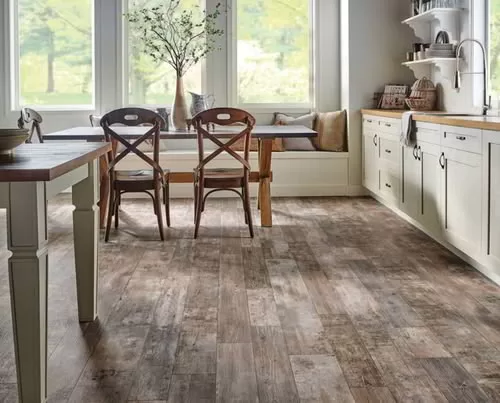
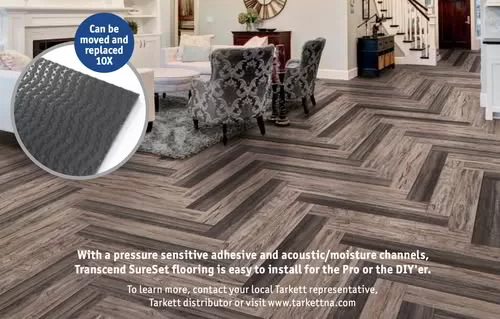

Sheet Vinyl Revival: Modern printing technology (EIR—embossed-in-register finishes) creates realistic wood, stone, and patterned visuals. Trending patterns include chevron, herringbone, and vintage/retro prints. Consumers appreciate affordable, durable alternatives to tile or hardwood.
LVT Core Technologies: Rigid core and waterproof innovations expand applications. Metroflor’s Isocore (closed-cell extruded PVC with 100% virgin resins, zero phthalates/formaldehyde) demonstrates manufacturer commitment to performance and sustainability.
Hardwood Advancements: Enhanced Engineered Construction (EEC) by Mohawk reduces splintering, edge damage, and installation time. Technology improvements enable wider boards and deeper finishes while maintaining stability.
Waterproof Flooring Solutions: COREtec® Innovation
COREtec® represents a patented waterproof flooring solution engineered for real-life household challenges. The product is distinguished by three critical protective qualities:
- 100% Waterproof: Fully sealed against moisture penetration
- Kidproof: Designed to withstand the wear and tear of active children
- Petproof: Resistant to damage from household pets
The product philosophy centers on addressing unpredictability in real life—recognizing that spills, accidents, and messes are inevitable in modern homes.
Design Versatility and Brand Ecosystem
COREtec® offers diverse aesthetic options to match any interior style, including wood-look planks in multiple colours and finishes and stone-look tiles with authentic textures. This dual aesthetic approach allows homeowners to achieve desired visual appeal without compromising protection.
Engineered FLOORS, the manufacturer, operates multiple complementary brands under one corporate umbrella:
- COREtec® (waterproof flooring)
- DreamWeaver (carpet solutions)
- Dwellings (residential flooring)
- Engineered FLOORS MULTIFAMILY (commercial applications)
- Pentz (specialty flooring)
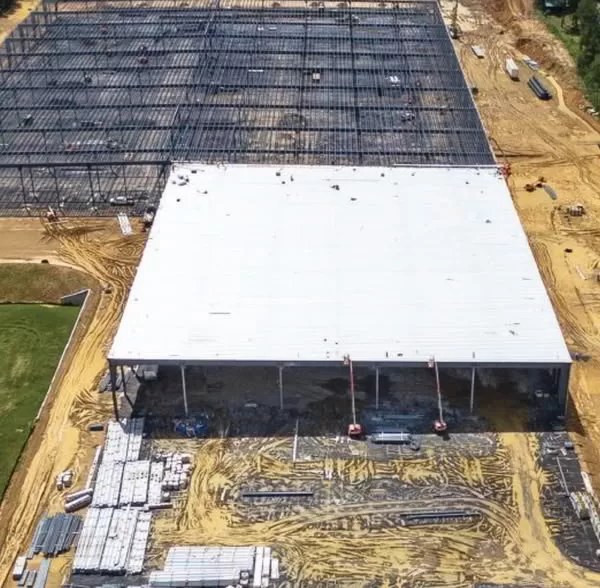
The company positions itself as “raising the roof for the floor covering industry“—emphasizing innovation and market leadership. Engineered FLOORS is expanding production capacity through a new modular carpet tile plant currently under construction in North Georgia, representing significant industry investment and commitment to scaling their product portfolio. The company operates from Calhoun and Dalton, Georgia, serving as an equal opportunity employer.
Sustainability in Flooring
Environmental considerations now influence product selection across categories:
- NAF (No-Added Formaldehyde) adhesives improve indoor air quality
- Recycled content in grout (recycled glass) and adhesives (recycled rubber crumb) reduces emissions
- Cold-pressing techniques for veneers enable sustainable production
- FloorScore certifications validate low-chemical emissions
Example: Laticrete’s Permacolor Select grout allows five-year product retention (vs. one-year disposal cycle for traditional grout), reducing waste while improving contractor profitability.
Online Reviews and Reputation Management
84% of consumers trust online reviews as much as personal recommendations, yet 99% of flooring retailers underperform in generating customer reviews. Retail audit findings reveal:
- Average reviews per store: 4.56 (vs. industry best practices of 10+)
- Average rating: 2.99/5.0 (concerning threshold for local search visibility)
- 29% of stores: Zero reviews
- 68% of stores: Two or fewer reviews
Strategic Insight: Going from 1–3 stars to 4–5 stars increases leads by approximately 25%. Post-installation follow-up via email/text requesting customer feedback significantly increases positive review rates; 73% of consumers say reviews older than 3 months lack relevance.
Recommended Approach
- Proactive timing: Request reviews immediately after installation/service completion
- Channel focus: Prioritize Google Local for review generation
- Continuous strategy: Aim for minimum 10 current reviews (< 3 months old)
- Don’t rely solely on reputation monitoring: Monitoring services alert you after negative reviews appear; a proactive review generation strategy prevents negative reviews from appearing in the first place
Preparation Ensures Business Exit Value
For retailers considering sale or succession, preparation directly impacts valuation. Key value drivers include:
Location: Complement expanding retailers’ existing footprints; assess whether your location serves growing or declining market segments.
Team Quality: Professional staff and skilled installers represent greater value than inventory. High-performing teams command premium acquisition prices.
Financial Clarity: Many retailers lack understanding of monthly break-even points or true profitability. Potential buyers demand audited financials; this preparation enhances both operational performance and exit valuation.
Physical Condition: Showroom and warehouse “show-ready” presentation impresses both buyers and customers. Disorganized inventory, old fixtures, and poor maintenance suggest operational neglect—reducing perceived value.
Key Takeaways for Flooring Retail Success
- Holistic integration: Buying, marketing, and management excellence are interdependent; optimize all three
- Showroom design matters: Strategic layout, lighting, color, and inspiration drive sales performance
- Brand leadership drives preference: Top suppliers capture disproportionate market share; consider exclusive or preferred relationships
- Digital transformation is non-negotiable: Millennials and Gen-X consumers research online before visiting; invest in websites, content, and social media
- Succession planning cannot wait: Begin five+ years before intended exit; early preparation maximizes value and ensures continuity
- Customer feedback builds credibility: Systematic post-service review requests compound competitive advantage
- Design storytelling resonates: Consumers buy emotional benefits, not just products; tell compelling narratives about inspiration, sustainability, and craftsmanship
- Innovation drives market differentiation: Waterproof, pet-resistant, and eco-friendly solutions address evolving consumer priorities and command premium positioning