
When it comes to resilient vinyl floorings, there are different levels of grades, which require the manufacturers to have different manufacturing capabilities. Some capabilities are more generic, which any factory in the field would all have, while some capabilities are more unique and require more equipment and facilities as well as expert know-how to produce them.
Here in this article, we explore the different grades of LVT flooring products and explain why each of these flooring products will indicate higher manufacturing capabilities in them.
To begin with, just like technology developments, resilient vinyl flooring also had a historic timeline of product and industry developments. The current LVT floorings, which are also known as Luxury Vinyl Tiles, were not originally a plank style product. In fact, its previous forms of product were known as homogeneous flooring and heterogeneous flooring. It took more cross industry collaborations to realise the manufacturing of LVT flooring products. It took efforts from the decorative surface industry to provide authentic looking printing layers as well as laminating technology that combined the different materials together. Therefore, even within the basic resilient flooring products, there are fundamental differences in manufacturing. A homogeneous flooring manufacturer cannot produce LVT, and an LVT flooring manufacturer cannot produce homogeneous floorings.
Historical Development of Resilient Flooring Products
| Type of Flooring | Product | First Seen in Market at | Level of Capability Requirements |
|---|---|---|---|
| Sheet Vinyl Flooring | Homogeneous Flooring | 1947 | |
| Sheet Vinyl Flooring | Heterogeneous Flooring | 1960 | |
| Vinyl Tiles | VCT | 1933 | Standard |
| Luxury Vinyl Tile | Dryback LVT | 1960s | Standard |
| Luxury Vinyl Tile | Click LVT | 1993 | Standard |
| Luxury Vinyl Tile | Loose Lay LVT | 2012 | Slightly Challenging (Thicker Loose Lay LVT requires better formulated composition for stability.) |
| Luxury Vinyl Tile | WPC Flooring | 2012 | Slightly Challenging (The foamed PVC plank (WPC) requires a cold-press lamination process.) |
| Rigid Core Vinyl Flooring | Click SPC | 2017 | Easy (Standard plank sizes are easy to produce. Exceptions are for extra small planks and extra large planks, which requires special techniques to produce and stabilise the planks.) |
| Luxury Vinyl Tile | Extra Large LVT & SPC | 2019 | Highly Challenging (Extra large planks need improved stability against dimensional expansion and contractions. Requiring higher level of composition engineering, stabilizing, and structure designs.) |
| Luxury Vinyl Tile | Extra Small Click LVT & SPC | 2021 | Highly Challenging (The extra small vinyl planks requires a specialised slotting machine to achieve planks less than 100mm width with locking system built in. Due to the significant investment for this slotting line.) |
| Rigid Core Vinyl Flooring | Light Density SPC | 2022 | Slightly Challenging |
Linoleum Flooring
The first widespread heterogeneous flooring was made from linoleum, invented by Frederick Walton in 1860. Heterogeneous flooring, by definition, is a multi-layered material. In the case of linoleum, it was made from a layered mixture of oxidized linseed oil, rosins, ground cork, and pigments. It was until 1960, when PVC composition was invented, that a wide surge in PVC based heterogeneous flooring was applied.
Homogeneous Flooring
The first single-layer, marbled homogeneous polyvinyl chloride (PVC) floor was said to have been invented in the United Kingdom, however it was the brands such as Tarkett and Gerflor that made its market success in 1947 and 1950s.
Vinyl Composition Tiles (VCT)
The earlier form of vinyl tiles. The polymer based tile style flooring was originally made from rubber but had the problem of degradation with exposure to oxygen, ozone, and solvents. The invention of PVC polymers solved this problem and gave the vinyl tiles more range of applications with improved chemical resistance and durability. The VCT does not offer high definition printing and only offers the colors that are created from the masterbatch. The first VCT was showcased in 1933.
Dryback LVT Flooring
The very original form of luxury vinyl tiles that offers authentic graphic printing layer in plank styles. The fundamental difference between LVT and VCT simply lays in the fact that LVT has a print layer that can offer diverse range of pattern designs and colors, where VCT can only offer colors according to its masterbatch. The launch for luxury vinyl tiles was a success as it delivers an entirely different way of floor installation and pavements to the existing resilient flooring categories. With the diverse pattern designs and color options available to select, the market has find it extremely appealing that lead to rapid market growth.
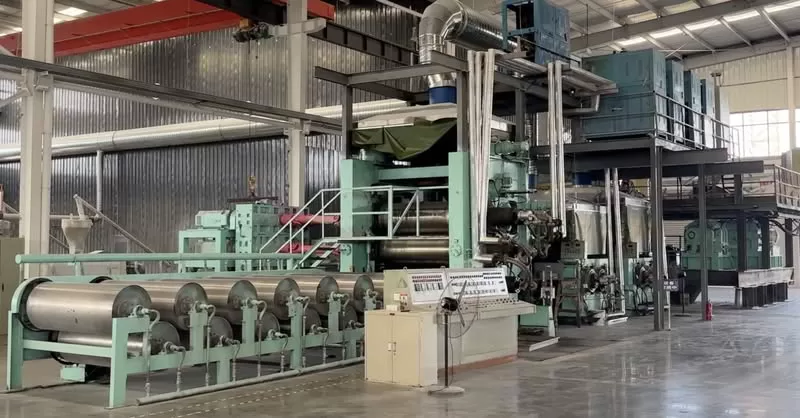
Click LVT Flooring
As click and lock technologies as long been applied on hardwood flooring as well as laminate floorings, the technology application transfering from wood based planks to polymer based planks were much quicker. The first click LVT (Luxury Vinyl Tile) flooring was invented by Välinge Innovation AB in 1993 and was first introduced commercially by the Norwegian company Alloc AS in 1996. Later in time, flooring technology companies such as Unlin and I4F has also launched their click technology for vinyl floorings.
Loose Lay LVT Flooring
The very first loose lay flooring was actually introduced by Tarkett back in 1978 with PUR based resilient floorings. For PVC based flooring it was actually around 2010s when it is introduced with the loose lay installation options. While at time, click luxury vinyl flooring was already a popular flooring product, the loose lay LVT flooring products was later introduced as a niche to counter the costs of click patients and faster installation.
Without having to pay for the patent licensing fee over the click technologies, the loose lay LVT offers more affordability with thicker planks.
Click SPC Flooring
The SPC (stone polymer composition) was originally applied for wall panels, and as the vinyl flooring industry began to saturate, SPC flooring was launched by MSI in United States in 2017. The launch was so successful and shortly after every brands begin to provide this range of flooring products too. However, the earliest SPC flooring application was in 2012, so it took 5 years before the market had the opportunity and demand to try them.
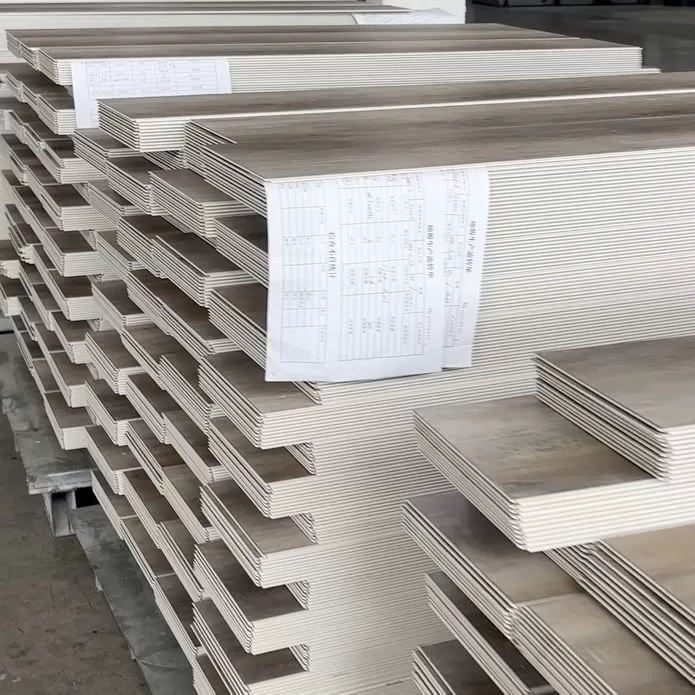
WPC Flooring
The WPC composition was invented in 1960s and was originally intended to use for outdoor floorings such as decking and porch since 1990s. The composition was made from a combination of polymers with wood based composition, hence the name for Wood Polymer Composition (WPC). This concept later were transferred to apply on indoor flooring, mainly vinyl based compositions, back in 2012 by USFloors. However, unlike the outdoor floorings, the WPC luxury vinyl tiles does not have any wood fibers in them. The WPC vinyl is simply a foamed PVC composition with calcium carbonates. The result is a lighter vinyl with hollow plank sound when walked on. This acoustic feature in WPC vinyl flooring has a closer resemblance to wood.
However, the foaming of WPC vinyl flooring also has its significant downsides, the physical rigidity and strength remain a major problem, and are often faced with issues such as click system breakage, dents, and plank breaks. Newer WPC vinyl flooring try to improve this by adding a layer of LVT on the top, but the issue with clicking system breakage remains. It was also found that the foaming WPC core is more susceptible to heat changing, therefore when it is assembled, it is done with the cold press lamination techniques.
Extra Large Vinyl Planks
Not all vinyl flooring manufacturers are able to produce extra large vinyl planks with higher performance in dimensional stability. In deed, all manufacturers are able to make extra large vinyl planks, its simply a process of changing to larger press cylinders and make different size to the cutting and slotting. However, in reality there is more to the story. As with bigger vinyl flooring tiles, any minor expansion and contraction in the planks can occur more distinctively when across longer and wider planks. Especially when this process is occuring unevenly, in addition to cupping, twisted warping can also occur. This kindly of product failure or product defects is a result of vinyl flooring manufacturers incapable of formulating and ensuring their vinyl flooring planks with improving physical properties and performance.
Extra large vinyl planks made by Hengdi Flooring is formulated with virgin PVC polymers and naturally sourced calcium carbonate. To further improve our extra large vinyl floorings’ physical performance, we strictly accumulate the materials at each manufacturing gateways. Our thermostatic aging chamber provide a consistent temperature to ensure all materials are aged / seasons under the same conditions for equal performance qualities.
Extra Small Vinyl Planks
The extra small vinyl planks requires a specialised slotting machine to achieve planks below than 100mm width with locking system built in. Due to the significant investment required for this slotting production line, and the low production output, very few suppliers has this equipment for production.
Light Density SPC Flooring
Light density SPC flooring was innovated and introduced for the purpose of reducing costs of freight. During the pandemic time when shipping costs sky rocketed, the weight limitation has greatly limited the quality of vinyl floorings that can be fitted into a container. There are still space left in the container that could not be leveraged. The innovation for slightly lower density SPC core meant flooring importers can fully leveraged the space there is left within the container. With 20% lighter, this innovation had supported flooring importers to cut down averaged shipping costs per unit.
Different Level of Manufacturing Capabilities in LVT Explained
Different types of resilient flooring or luxury vinyl flooring requires different level of manufacturing capabilities. Some products are easier to manufacturer than others. However, its also worth noting that making internationally qualified vinyl flooring products is different from making above industry quality products. For example, even for the ordinary dry back LVT floorings with common thickness between 2mm to 3mm, the quality difference can be so significant that one starts to deform over time. In the resilient flooring industry, there are brands that sell their LVT products with exceeding industry standards. The pricing over these top quality LVT products also have sightly higher premium.
Industry Lead Manufacturing Capabilities in LVT
Here at Hengdi Floor China, we provide industry lead vinyl flooring product solutions for global buyers. Using industry lead formulation and technologies, our best LVT / SPC products can achieve acclimation free performance. In addition, with our scratch resistance coating solution, our vinyl products can also meet RTS 1 rating with 38N testing conditions. The RTS 1 rating offers laminate like scratch resistance performance for vinyl flooring products.
To inquiry about our industry leading vinyl flooring products, please feel free to reach out to us;